
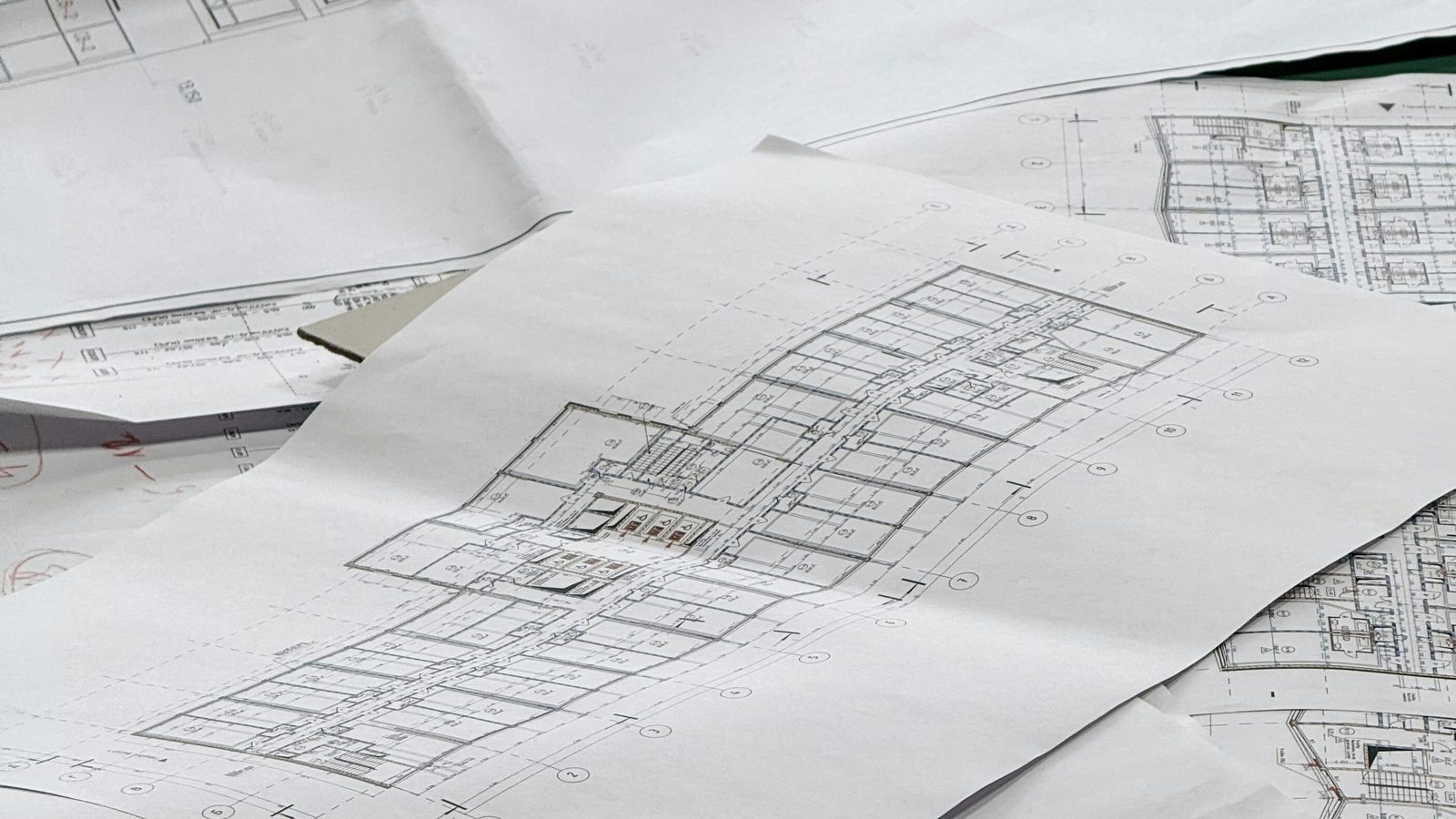
Every flat in Mumbai has at least three sizes, and a salesperson can choose which one to say out loud. The carpet area is the floor inside your walls. The built-up area adds the walls themselves and usually the balcony, and the super built-up area adds a share of the lobby, the lifts and whatever the building calls amenities. Carpet area vs built up area vs super built up area is the first arithmetic a buyer should do on any quote, and most buyers never do it.
The gap between the smallest and the largest of those numbers typically runs 25 to 35 per cent. On a ₹2 crore flat, that means somewhere between ₹40 lakh and ₹52 lakh of the price pays for space you will walk through on the way to your door but never furnish. This piece works through carpet area vs built up area on a real quote, sets out what the RERA Mumbai rules changed and what they left alone, and ends with three questions that close the gap on a site visit.
Three numbers for one flat: carpet area vs built up area
Take a single 2 BHK, the sort that fills listings for 2 BHK flats in Mahim and residential projects in Dadar alike. Measured wall to wall on the inside, with its internal walls counted in, it comes to 740 square feet. That is its carpet area.
Add the thickness of the external walls and the balcony, and the same flat measures somewhere around 850 to 890 square feet. That is its built-up area, and the first half of the carpet area vs built up area comparison. The measuring tape has simply moved to the outside face of the wall.
Now take the building's common areas, from the entrance lobby to the lift cores and the clubhouse, and divide them across every flat in proportion to its size. Add this flat's share and it measures 1,000 square feet. That is its super built-up area, which some projects call saleable area.
One flat, three sizes. The salesperson who says "a thousand square feet" is not lying. They are quoting the largest number available, and the super built up area meaning is exactly that: the biggest honest figure the building can attach to your flat.
What the RERA carpet area definition actually says
The Real Estate (Regulation and Development) Act, 2016 settled the smallest number. Under the RERA carpet area definition in Section 2(k), carpet area is the net usable floor area of an apartment. It leaves out the external walls and the service shafts, along with any exclusive balcony, verandah or open terrace, and it counts the area under the internal partition walls.
Two details in the RERA carpet area definition matter more than they look. Balconies are out, which was a real change in Maharashtra, where carpet area as commonly quoted under the older Maharashtra Ownership Flats Act took them in. Internal walls are in, so a flat with many small rooms carries more wall inside its carpet area.
MahaRERA adds a disclosure rule on top. A promoter registering a project has to state the carpet area of each apartment and, separately, the area of any exclusive balcony, verandah or open terrace that comes with it. RERA Mumbai filings are public, so you can check those figures against a brochure before you ever meet a salesperson. If a brochure's number differs from the figure the RERA carpet area definition produces in the filing, the filing is the one that counts. The piece on RERA, OC and CC shows where to find it.
Super built up area meaning, and what is loading in real estate
So what is loading in real estate, in practice? It is the difference between carpet area and super built-up area, expressed as a percentage. It is usually quoted on top of carpet: a loading of 35 per cent means the super built-up figure is 1.35 times the carpet area. Some brokers quote it as a share of the super built-up figure instead, which makes the same flat sound less loaded, at 26 per cent rather than 35.
The loading percentage in flats Mumbai developers quoted before 2017 typically ran from 25 to 35 per cent in mid-rise buildings, and could pass 40 per cent in towers with large podiums, double-height lobbies and full clubhouses. Anyone asking what is loading in real estate terms on a particular tower should get that tower's own figure, in writing, rather than a market average.
A higher loading is not automatically a bad deal. What matters is whether you want what you are paying for, and whether the per square foot rates you compare between two buildings are measured on the same base. Usually they are not, and the loading percentage in flats Mumbai brokers mention in passing is rarely the one written into the agreement.
Carpet area vs built up area, on a ₹2 crore quote
Two projects a short drive apart, both asking about ₹2 crore for a 2 BHK. Compare them on carpet area vs built up area and super built-up, and they stop looking alike.
Project A quotes ₹20,000 per square foot on 1,000 square feet super built-up, with a loading of 35 per cent, at the top of the loading percentage in flats Mumbai buildings have typically carried.
- Price: ₹20,000 × 1,000 = ₹2 crore.
- Carpet area: 1,000 ÷ 1.35 = 741 square feet.
- Real price per square foot of carpet: ₹2 crore ÷ 741 = about ₹27,000.
- Space paid for outside your walls: 259 square feet, or about ₹52 lakh of the price.
Project B quotes ₹26,000 per square foot on 770 square feet of RERA carpet area.
- Price: ₹26,000 × 770 = just over ₹2 crore.
- Real price per square foot of carpet: ₹26,000.
Project B's rate sounds 30 per cent more expensive. It is cheaper for every square foot you can live on, and the flat is 29 square feet larger inside. That is the whole trick of carpet area vs built up area pricing, and it works on careful people because the headline rate is the number they remember.
A rate quoted on super built-up and a rate quoted on carpet are two different currencies, and the lower one is often the more expensive flat.
For new residential projects in Dadar, Mahim and Worli, brokers now mostly quote on RERA carpet area. Resale listings are a different matter, and older flats are still regularly advertised on built-up or super built-up figures. The Mahim guide puts 2 BHK flats in Mahim at ₹2.8 crore to ₹4.5 crore for 650 to 850 square feet of carpet. Before comparing 2 BHK flats in Mahim with residential projects in Dadar across the line, convert every quote to carpet first.
What RERA changed in 2017, and what it did not
MahaRERA began registering projects in 2017. Since then a registered project has had to disclose carpet area as the Act defines it, and the agreement for sale has to state it. That ended agreements for residential projects in Dadar and across Maharashtra that described a new flat only in super built-up terms, and it is the main thing RERA Mumbai buyers gained.
It did not end loading, and it did not change the super built up area meaning brokers work with. A developer quoting ₹20,000 on super built-up can quote ₹27,000 on carpet for the same flat at the same cost. RERA Mumbai rules made the numbers comparable, but they did not make them lower.
Resale sits outside the Act altogether. A flat sold by one owner to another is not a registered project, so a resale listing can use whatever measure the seller or broker prefers, and many still use the biggest. The carpet area vs built up area question is still live on every resale visit.
And balconies are now priced on their own. Because they fall outside the carpet definition, some projects add an enclosed balcony or a deck to the quote at a separate rate. It is also a second loading, and it deserves the same arithmetic as the first.
Usable area vs carpet area
Even the figure the RERA carpet area definition produces is not the floor you can put furniture on. Carpet area includes the footprint of every internal wall, and in a 2 BHK with a separate kitchen and two bathrooms those walls can take 30 to 45 square feet.
Usable area is not defined in the Act. It is still the number that decides whether a bed and a wardrobe both fit in the second bedroom. The usable area vs carpet area gap in a typical 2 BHK is small on paper and very noticeable once the furniture arrives, which is why it is worth measuring yourself. Here is how to calculate carpet area of a flat you are buying, and check it against what you were sold:
- Ask for the unit plan with internal room dimensions, not only the total.
- Multiply length by width for every room, passage and bathroom, and add them up.
- Add the internal walls: take their length off the plan and multiply by their thickness, usually 115 to 150 millimetres.
- Compare the total with the carpet area in the MahaRERA filing and the draft agreement. A difference of more than 2 or 3 per cent is worth a written question.
- At possession, measure the rooms again with a laser measure before signing the possession letter.
Knowing how to calculate carpet area of a flat also settles the usable area vs carpet area argument at possession, because the room dimensions will already be in writing.
Three questions that close the gap on a site visit
Take these to the sales office in this order, write the answers down, and treat them as the carpet area vs built up area test for that project.
- "What is the RERA carpet area of this flat, as filed with RERA Mumbai, and is the rate you quoted per square foot of that carpet area?" If not, ask for the rate recalculated on carpet first.
- "What is priced on top of the carpet area?" Balcony or deck areas, car parking and development charges should each come back as a separate line with its own number.
- "Can I have the unit plan with room dimensions, and the clause in the draft agreement that deals with a change in carpet area at possession?" A developer who is confident in the number will hand both over the same day. With the plan in hand, the steps above on how to calculate carpet area of a flat take about twenty minutes.
Gala Habitats lists carpet areas on its project pages: Paramount Matunga from 804 square feet, Aakasa Shivaji Park at 890 and 1,150 square feet, and Aakasa Worli from 1,300 square feet. Ask our sales team the same three questions, including how the RERA carpet area definition applies to each flat. The answers should be as plain as the ones this piece tells you to expect from anyone else.
The next Buyer Education piece applies the same approach to buying a Mumbai flat from abroad.