
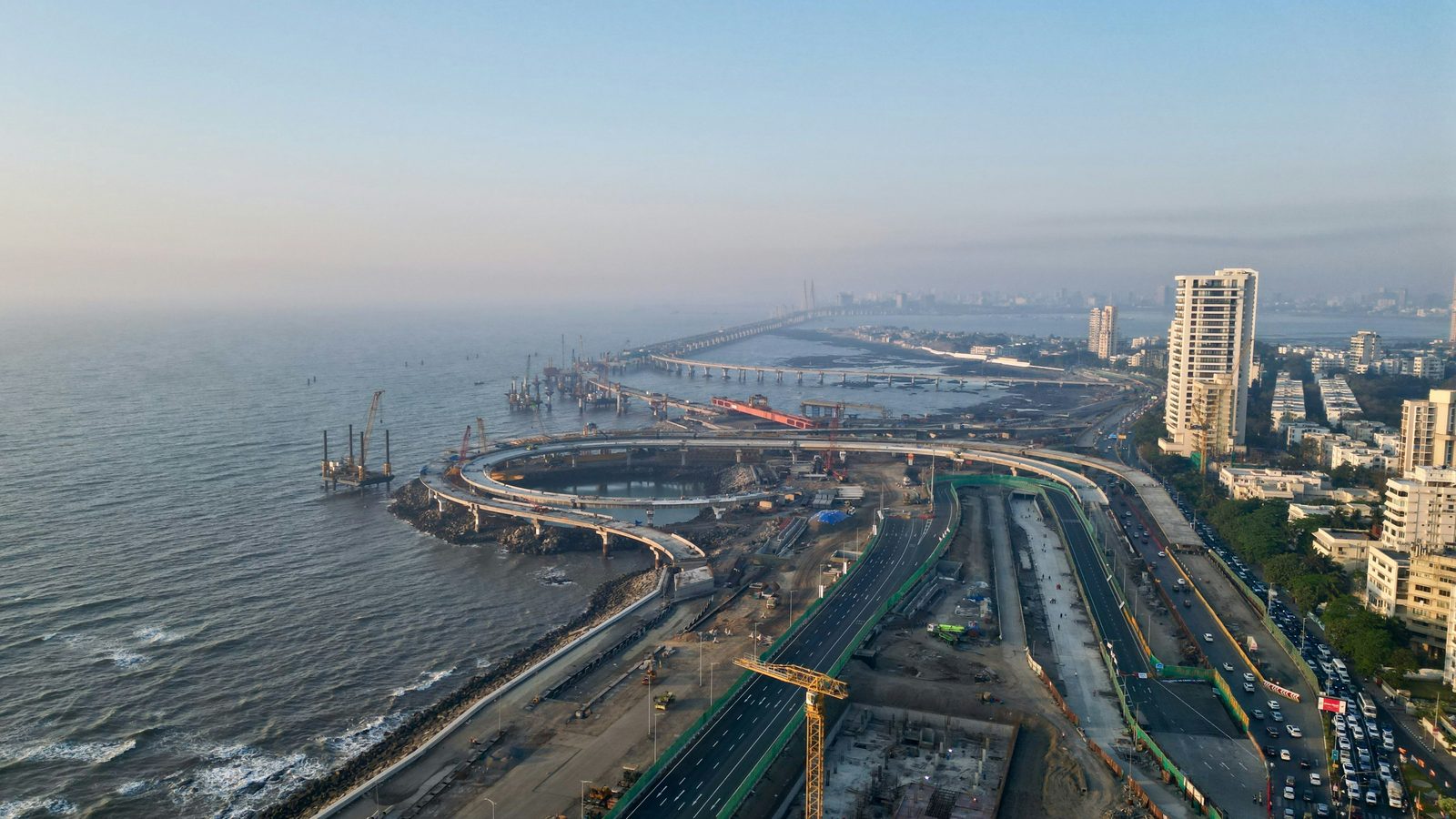
If you put a pin in each Gala project on a Mumbai map, the pins cluster. Aakasa Worli on the south end. Paramount Matunga in the middle. Aakasa Shivaji Park on the north end. Three live projects, all inside an eight kilometre stretch between Mahim and Worli. None in the western suburbs. None in the eastern suburbs. None in the new growth pockets in Thane or Navi Mumbai.
The map is a choice. This piece explains the choice.
What the corridor is
The Bandra-to-Worli corridor is the eight kilometre stretch of central Mumbai that runs from Mahim Bay in the north to the Worli sea face in the south. It contains, in order, Mahim, Mahim West, Matunga, Dadar, Shivaji Park, Prabhadevi, Lower Parel, Parel and Worli. Every one of those is a defined micro-market with its own pricing logic and buyer profile.
What the corridor shares is geography. It is the narrowest part of the island. The Western Line runs through it. The Eastern Line is fifteen minutes east of it. The Sea Link enters from the west and the Coastal Road exits from the south. The Bandra-Worli office cluster is at one end. The Bandra-Kurla Complex is a single road away. South Mumbai is twenty minutes south by the Coastal Road. The airport is twenty-five minutes by the highway.
For a buyer, that means the corridor sits inside the smallest possible radius from the largest possible share of Mumbai's economic activity. For a developer, the same is true.
Why we concentrate
The case for concentrating in one corridor, instead of spreading across the city, comes down to three things.
Redevelopment-ready land
Central Mumbai's residential stock is old. The buildings in Matunga, Dadar, Shivaji Park and Parel were largely put up between the 1950s and the 1980s. Many are at or past the point where redevelopment becomes the rational answer for the society. That gives a developer working in the corridor a meaningful pipeline of sites without competing for the small handful of green-field plots that come up in the western suburbs in any given year.
It also means new flats in Dadar, Parel and Worli, on a sustained basis, will keep coming through redevelopment rather than through fresh land acquisition. A developer operating in the corridor can plan for that supply. A developer working across ten markets cannot.
Predictable buyer demand
Central Mumbai buyers tend to be central Mumbai buyers. People who grew up in Matunga look for a 3 BHK in Matunga. People with family in Shivaji Park want to stay close to the maidan. Worli's buyer base is different, with a higher share of senior corporate buyers and HNI families, but it too is largely a corridor-internal pool. The result is that a new project in the corridor is sold at least partly to the corridor itself.
That pool is not infinite, but it is steady, well-informed, and rewards a developer who shows up consistently. A new launch in Worli that is the developer's third building in the area is treated differently from a new launch by a developer the buyer has never heard of.
Operational simplicity
Three projects across an eight kilometre stretch share a labour pool, a consultant base, a material supply chain and a site supervision team. The same project manager can be on Paramount Matunga and Aakasa Shivaji Park inside the same morning. The same waterproofing crew can move from Worli to Matunga in one shift. Quality discipline holds because the same people are doing the same work across all three projects.
A developer with one project in Borivali, one in Powai and one in Worli does not get any of those operational advantages. Three small teams instead of one strong one.
Building elsewhere would not be a strategy. It would be a distraction.
What we look for in a new site
Within the corridor, not every plot becomes a Gala project. We have a working filter that any new site has to pass before we commit to it.
- Walking access to a Western Line or Harbour Line station, or a defined road link to the Coastal Road. Connectivity below this threshold does not work for a premium central Mumbai buyer.
- A clear title and a society or land-owner who is honest about the position. Title issues do not go away. They get more expensive.
- FSI economics that allow the building to deliver a competitive carpet area at a price the corridor's buyers will pay. Sites where the maths only works at a stretched price point get declined.
- School and hospital catchments inside fifteen minutes by car. This is a buyer requirement, not ours, but it is final.
- A site where the construction itself can be carried out cleanly. Sites with severely restricted access, contested boundaries, or unresolved planning constraints are not worth the friction.
The filter is conservative. We pass on more sites than we pursue. The cost of saying no to a marginal site is small. The cost of saying yes to one is years of work on a project that will not earn the buyer or the team's trust.
What this means for the next two years
Gala's next round of projects will sit inside the same corridor. The signals from the Coastal Road, the new FSI norms, and the recovery in central Mumbai redevelopment activity all point to more high-quality sites becoming available in Dadar, Parel and Worli over the next twenty-four months. New projects in Worli are likely to lead, followed by residential projects in Dadar, with a possible Mahim addition that has been on the team's radar for a year.
This is not a marketing claim. It is a working plan. Sites are being evaluated. Some will become Gala projects. Several will not. Buyers and channel partners who want to be on the early circulation list for the next launch can ask to be added by writing to info@galahabitats.com.
The simple version
Gala builds in the Bandra-to-Worli corridor because we know the corridor, the corridor knows us, and the operational and commercial advantages of staying inside it compound with every new project.
The next Developer POV piece looks at the construction specification we hold across every project, line by line.