
Matunga is the part of central Mumbai where the typical buyer is a whole family rather than a couple. Households here buy for three generations at once, and they buy within walking distance of the same temple, the same school and the same vegetable market their parents used. That habit shapes residential projects in Matunga more than any amenity list does, from the size of the homes developers plan to the price that 3 BHK flats in Matunga hold when the wider market goes quiet.
This guide covers flats in Matunga East and the quieter west side, what Matunga property rates look like in mid-2026, and where the friction sits. The friction is real. Parking is scarce, much of the housing stock is older than the people buying into it, and a large share of buildings sit inside a redevelopment conversation that may take the better part of a decade to finish.
What Matunga is
Matunga lies between Dadar to the south and Sion to the north, with Mahim along its western edge. After the plague years of the 1890s, the Bombay Improvement Trust laid out the Dadar-Matunga-Wadala-Sion scheme as a grid of wide roads, circles and garden plots, meant to draw families out of the crowded districts further south. King's Circle, with Maheshwari Udyan at its centre, is the clearest surviving piece of that plan, and new residential projects in Matunga still have to fit inside its street grid.
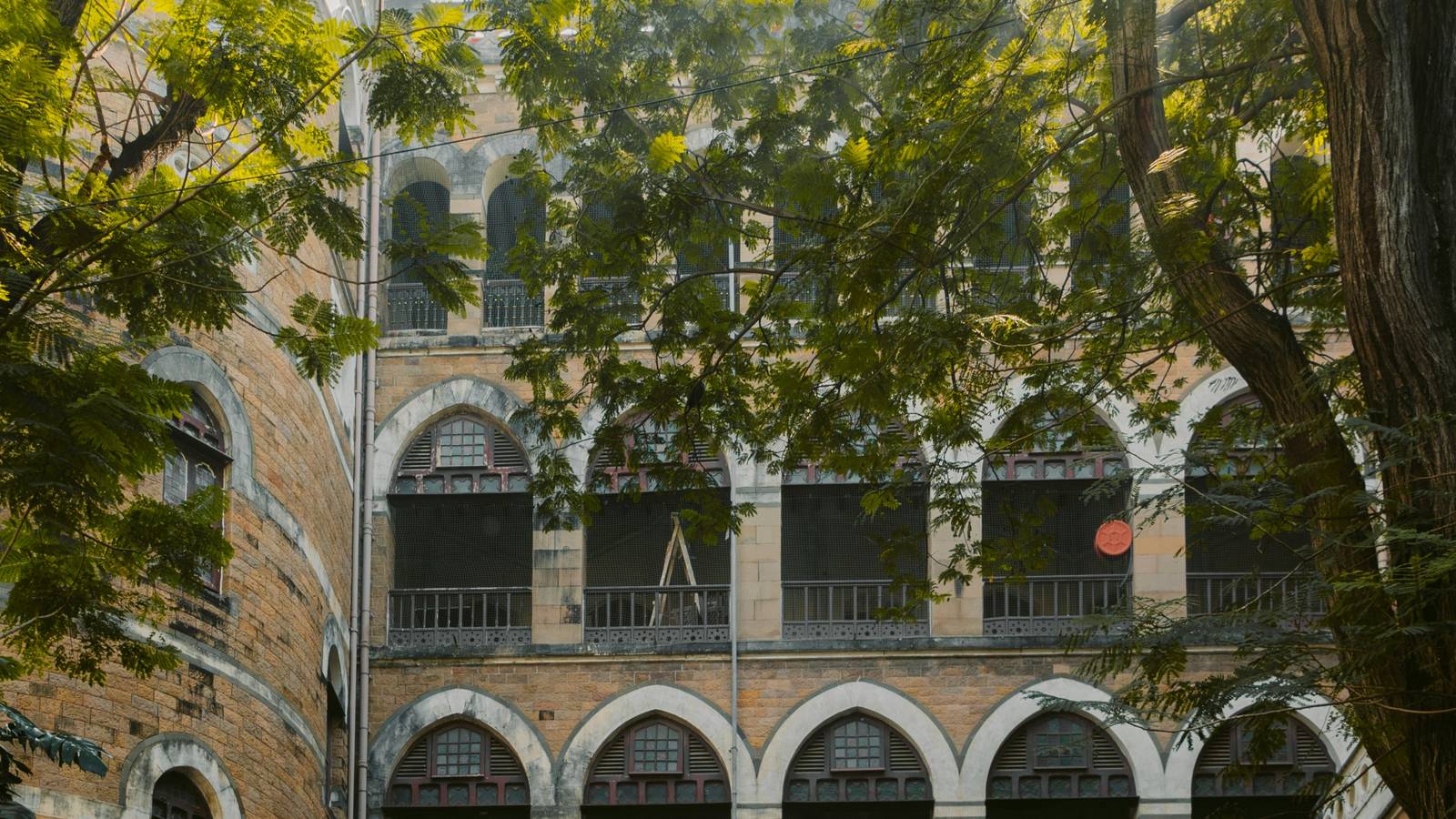
The buildings that went up on those plots through the 1920s, 1930s and 1940s gave Matunga its look: three and four storey blocks with deep balconies and a shared compound, set back from roads wide enough to carry a tree canopy. Many still stand, and they are the stock that most redevelopment projects in Matunga are now working through. Some are handsome, and a good number are tired.
Three railway lines touch Matunga. Matunga station on the Central line serves the east side, Matunga Road on the Western line serves the west, and King's Circle station on the Harbour line sits at the northern edge. Few Mumbai neighbourhoods have that, and commuting families usually ask about flats near Matunga station first.
The two Matungas
For property purposes Matunga is two neighbourhoods, divided by the Central line tracks.
Flats in Matunga East are what most people mean when they say Matunga. This is the side of the Central line station and the market, with Bhaudaji Road and Telang Road carrying most of the daily traffic. The South Indian institutions that give Matunga its reputation are here, from the Asthika Samaj temple to the Shankar Mattham on the road that carries its name. The buyer for residential projects in Matunga East is overwhelmingly local: a family moving from an inherited or rented flat in an older building into a newer one three lanes away.
Matunga West runs from the tracks towards Matunga Road station and Mahim. It is quieter, closer in feel to Mahim than to King's Circle, and its buyers more often come from outside Matunga, drawn by Western line access and Matunga property rates that usually sit below Dadar West.
Older societies and new residential projects in Matunga
Matunga property rates are among the steadiest in central Mumbai. Listing portals put average asking prices for flats in Matunga East at roughly ₹48,000 to ₹50,000 per square foot in 2026, while registered transactions average closer to ₹33,000 to ₹34,000. Asking prices are pulled up by the small amount of new construction in Matunga, mostly single towers, while the registered figure is dominated by resale flats in older buildings.
Indicative ranges for residential projects in Matunga as of mid-2026, to brief a broker with rather than to quote:
- 2 BHK flats in older society buildings, carpet 550 to 750 square feet: ₹1.9 crore to ₹2.8 crore, with the lower end usually tied to redevelopment projects in Matunga still under negotiation.
- 2 BHK flats in new construction in Matunga, carpet 700 to 850 square feet: ₹3.3 crore to ₹4.6 crore.
- 3 BHK flats in Matunga East and West in newer buildings, carpet 1,000 to 1,300 square feet: ₹5 crore to ₹8 crore, with the top of the band reserved for the few towers holding open views.
- Older 3 BHK society flats of comparable carpet area: ₹3.5 crore to ₹5 crore, though age, occupation certificate and redevelopment status all need checking first.
Why demand for 3 BHK flats in Matunga behaves differently
In most of the corridor, a 3 BHK is a stretch purchase. The typical 3 BHK buyer in Mahim or Worli is a couple with children who have outgrown a 2 BHK, and the third bedroom is a study waiting to become a nursery. Demand there thins quickly above ₹5 crore, and developers plan their unit mix accordingly.
Matunga works the other way round. The default buyer is a family of three generations who intend to keep living together, and the third bedroom belongs to a grandparent. That buyer does not trade down to a 2 BHK when prices rise. They find the extra money or they wait, which is why resale 3 BHK flats in Matunga have tended to hold their value through slow years better than the smaller configurations around them.
In Matunga the third bedroom belongs to a grandparent, and that one fact holds up 3 BHK prices when the rest of the market goes soft.
The same logic keeps upgrading families inside Matunga, and it is why residential projects in Matunga lean towards three bedroom homes. A household that has walked to the same temple for forty years will pay more for a newer building inside Matunga than for a bigger one in Chembur.
Daily life, schools and the food street economy
Mornings in Matunga East are organised around food. By seven the cafés around King's Circle and near the station are full, and by half past nine the breakfast crowd has thinned into office commuters.
The food trade keeps Matunga East busy and lit from early morning to late evening, which is why it feels easy to walk after dark. The cost is noise. A flat directly above a popular café, or on the stretch of road that leads to the station, hears the day begin at six, so anyone comparing flats near Matunga station should visit at that hour.
The schools in Matunga Mumbai parents mention first are Don Bosco High School on Nathalal Parekh Marg, founded in 1942, and SIES High School, which has been teaching in Matunga since 1932. The college cluster, with Ruia and Podar colleges near King's Circle and VJTI a few minutes away, keeps a steady rental market alive for the smaller flats.
Sion Hospital is about ten minutes by car, and Hinduja Hospital in Mahim a similar drive from the west side.
Connectivity, in real minutes
Working numbers from flats in Matunga East near King's Circle, off-peak.
- Dadar: one stop on the Central line, or 5 to 8 minutes by car.
- Eastern Express Highway: 5 to 7 minutes by car.
- Eastern Freeway: 7 to 10 minutes to the Wadala entry.
- Bandra Kurla Complex: 20 to 25 minutes by car.
- Lower Parel office cluster: 20 to 25 minutes by car.
- Mumbai airport, domestic terminal: 35 to 50 minutes by car, depending on the route.
Peak hours add 40 to 60 per cent to the road numbers.
What Matunga does not offer
Parking is the first problem, and the one buyers most often underestimate. Most buildings from the Improvement Trust era were designed with no parking at all, and cars now line both sides of Telang Road through the night. An older flat with an allotted space is the exception. Stacked parking in new construction in Matunga solves it for residents but not for visitors, which a family that hosts relatives every weekend will notice.
The housing stock is old. A large share of Matunga's buildings date from before 1960, and many stand on plots leased from the municipal corporation, which adds a layer of approvals to any redevelopment. At the southern edge, the Hindu Colony and Dadar Parsi Colony heritage precincts put taller proposals in front of the heritage conservation committee. The result is that redevelopment projects in Matunga move slowly, and new residential projects in Matunga arrive one plot at a time. A society that signs with a developer this year may not see its members back in their new flats until the early 2030s.
Evenings are quiet, and the nearest mall-grade shopping is Phoenix Palladium in Lower Parel.
Is Matunga a good place to live?
For a family that wants to stay close to a community it already belongs to, very little inside the corridor competes, and few neighbourhoods in the city work as well without a car. That is the case residential projects in Matunga rest on, more than any clubhouse.
It suits a young couple less well. The 1 BHK market is thin, new construction in Matunga skews towards 3 BHK flats in Matunga and larger 2 BHKs, and the evenings are early.
The comparison most buyers end up running is Matunga vs Dadar. Dadar West, around Shivaji Park, prices higher and has the maidan, which Matunga has nothing to match. On a Matunga vs Dadar comparison, Matunga property rates sit below Dadar West and above most of Dadar East, and Matunga is noticeably calmer than either at street level. Anyone weighing Matunga vs Dadar should stand outside both stations at half past eight on a weekday before deciding. The guide on living in Mahim runs the same arithmetic for the pocket immediately to the west.
If you are looking
Walk the lane at eight in the morning and again at nine at night before shortlisting any of the residential projects in Matunga. Anyone still asking is Matunga a good place to live will get a better answer from those two walks than from any brochure.
Ask for the occupation certificate on anything built in the last thirty years. On redevelopment projects in Matunga, read the society's minutes before paying anything. The piece on RERA, OC and CC explains what those documents should say.
For flats near Matunga station, check which side of the station the building's gate opens onto. A two minute walk on the map can become ten at peak hour if the route runs through the market.
Map the walk from the building to the schools in Matunga Mumbai families already use, and confirm parking in writing, including whether the space is covered, stacked or open.
Gala Habitats is building in Matunga, so read this guide with that in mind. Paramount Matunga is a tower of 2 BHK and 3 BHK flats in Matunga East on Shankar Mattham Road, a two minute walk from King's Circle, registered with MahaRERA under P51900079704. Aakasa Shivaji Park is a short drive south in Dadar West. We have written the section on what Matunga lacks as plainly as the rest, because a family that moves here for the wrong reasons does not stay.
The next guide in this series looks at living near Shivaji Park.