
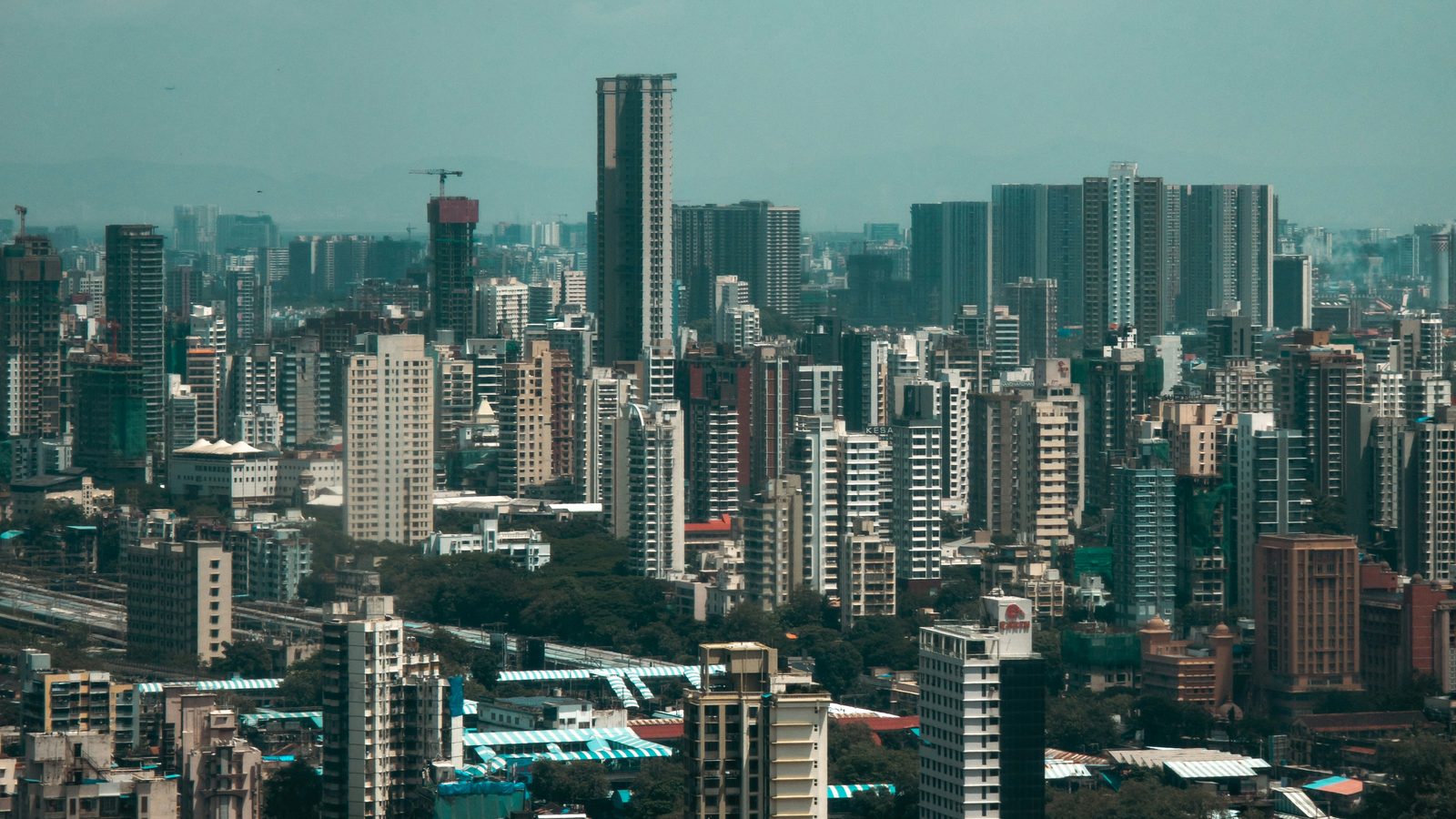
Dadar is the one address in central Mumbai that every buyer in the corridor passes through, usually on a platform, and almost nobody describes accurately. The railway runs through the middle of it, and the two sides of the line have different histories, different streets, different buyers and different prices. Dadar East and Dadar West are two neighbourhoods that happen to share a station and a pin code's worth of reputation.
This guide takes each side in turn: who buys there, what flats in Dadar West and flats in Dadar East cost in late 2026, where new residential projects in Dadar are coming from, and what the address asks of the people who live in it. It sits at the centre of a series that already covers Mahim, Matunga and Shivaji Park, because Dadar sits at the centre of those three on the map.
One station, two cities
Dadar station is a junction. The Western line platforms sit on the west side, the Central line platforms on the east, and the footbridges between them carry one of the heaviest interchange crowds on the suburban network. Railway figures put the station's daily footfall at around five lakh people. That crowd is the first thing a visitor learns about Dadar and the last thing a resident stops noticing.
Road traffic crosses the tracks on Tilak Bridge, which opened in 1925 and was declared unsafe after a structural audit in 2019. A six-lane cable-stayed replacement is being built beside it, and the full bridge is not expected before 2028. Until then, a drive from one side of Dadar to the other at six in the evening can take longer than the drive from Dadar West to the Bandra-Worli Sea Link.
West of the line, the neighbourhood is organised around Shivaji Park, Ranade Road and the flower market by the station. East of it, the shape comes from the Dadar-Matunga-Wadala-Sion scheme laid out after the plague years of the 1890s, which produced the Parsi Colony and Hindu Colony in the north and a denser, more commercial district running south towards Dadar TT and Hindmata.
Flats in Dadar West: the Shivaji Park side
Dadar West is the more famous half, and the more expensive. Its centre of gravity is the maidan, which the Shivaji Park guide covers in detail, but the residential streets run well beyond it, from Gokhale Road down to the sea at Dadar Chowpatty and north to the Mahim border.
The typical buyer of flats in Dadar West is a family that already lives within three kilometres. Many are Marathi-speaking households who grew up in the lanes around Shivaji Park and want to stay, often moving from a resale flat in a 1950s building into a redeveloped one on the same road. A smaller group arrives from the western suburbs, drawn by the Sea Link at around ten minutes by car and by the Aqua Line Metro, whose Dadar station opened on 10 May 2025 and runs underground to Worli and the Bandra Kurla Complex.
Schools are a large part of the case. Balmohan Vidyamandir, the Marathi-medium school near Shivaji Park, still shapes which lanes families look at, and Bombay Scottish in Mahim is about eight minutes away by car. Hinduja Hospital is about six.
Flats in Dadar East: two halves of their own
Dadar East splits again, and the split matters more than any comparison with the west.
The northern half is the planned part. Dadar Parsi Colony, built under the 1899 to 1900 improvement scheme, is the largest Zoroastrian settlement in the world, with low buildings, high ceilings and streets planted one tree species at a time. Next to it, Hindu Colony holds Rajgruha, the house Dr B R Ambedkar built between 1931 and 1933, now a heritage monument with a museum on its ground floor. Both colonies are heritage precincts, both are quiet by central Mumbai standards, and flats in them rarely come up.
The southern half, towards Dadar TT, Naigaon and Hindmata, is older Mumbai at full volume. It has cloth wholesalers and chawls, it has the Central line's commuters, and it has the most active redevelopment pipeline in Dadar. Buyers of flats in Dadar East on this side are more often working couples who commute on the Central line or drive to the Eastern Freeway, about ten minutes away through Wadala, and who would rather have a larger flat here than a smaller one across the bridge. KEM Hospital in Parel is about ten minutes south.
Dadar property rates, side by side
Listing portals put average asking Dadar property rates at roughly ₹53,000 to ₹57,000 per square foot in Dadar West and ₹46,000 to ₹48,000 in Dadar East in 2026. That is a gap of around 15 per cent at the average, and the averages hide most of the story.
Indicative ranges as of late 2026, to brief a broker with rather than to quote:
- 2 BHK flats in Dadar West in older buildings, carpet 600 to 800 square feet: ₹2.7 crore to ₹4.2 crore.
- 2 BHK flats in Dadar East in older buildings, carpet 620 to 780 square feet: ₹2.1 crore to ₹3.7 crore, with Hindu Colony at the top of that band.
- 3 BHK flats in Dadar East in new construction, carpet 850 to 1,150 square feet: ₹4 crore to ₹6.5 crore.
- 3 BHK flats in Dadar West in newer buildings, carpet 900 to 1,200 square feet: ₹5.5 crore to ₹8.5 crore, with maidan-facing upper floors at the top.
Read those bands carefully and the East and West labels start to blur. A 2 BHK in Hindu Colony can cost what a comparable flat two lanes off Ranade Road costs, while a flat near Hindmata can sit 25 to 30 per cent lower. In Dadar property rates the pocket matters more than the side of the tracks, and the side of the tracks matters more than the building's age.
New construction in Dadar
Neither side has empty land. Every piece of new construction in Dadar replaces something, which means supply arrives one society or one chawl at a time, and residential projects in Dadar are almost all redevelopment.
The heritage precincts slow that further. Shivaji Park on the west, and the Parsi Colony and Hindu Colony on the east, put taller proposals in front of the heritage conservation committee, so the planned parts of Dadar change slowly by design. Most residential projects in Dadar that reach the market sit outside those precincts, along the main roads on the west and in the southern half of Dadar East, where towers of 25 floors and more are now common.
Then there is Naigaon. The state's redevelopment of the BDD chawls there handed 864 rehabilitation flats to former tenants in March 2026, and more towers are following. Those flats are not for sale, but they will change the streets around them, and a buyer looking at new construction in Dadar East near Naigaon should expect a long construction period on the next plot.
Portals tend to file Dadar alongside its southern neighbours, so a search for new flats in Dadar Parel Worli returns a mix of addresses with very different prices per square foot. Filter by the side of the tracks before reading the numbers.
What Dadar asks of you
Dadar is busy in a way that no amount of soundproofing fixes. The station crowd spills into Ranade Road and the lanes around the flower market from early morning, and anyone living within five minutes of the station lives with it.
The east has a flooding problem with a name. Hindmata junction, at the southern edge of Dadar East, has been one of Mumbai's worst waterlogging spots for decades. The municipal corporation spent close to ₹190 crore on underground holding tanks, one beneath Pramod Mahajan Udyan in Dadar West, to drain it. Heavy monsoon days still bring the water back, if more briefly than before.
The west has its crowds. On 6 December each year very large numbers of people come to Chaitya Bhoomi at Dadar Chowpatty, and the roads near Shivaji Park are managed for several days. The kabutarkhana at the centre of Dadar West has been the subject of a running dispute since the municipal corporation covered it in August 2025, with protests at the site and the matter before the Bombay High Court. Disputes of this kind take years to settle in Mumbai, and the junction around it gets slower while they do.
In Dadar the side of the tracks decides the price, but the lane decides the life, and buyers who only look at the first get the second wrong.
Is Dadar a good place to live?
Is Dadar a good place to live for a family that wants everything within walking distance and both railway lines at the door? Few addresses in Mumbai compete with it. Is Dadar a good place to live for someone who needs quiet? Only in the colonies, and only if a flat comes up.
The Dadar East vs Dadar West choice usually comes down to which commute a household runs and which kind of street it can tolerate. Western line commuters and families with roots around the maidan tend to choose the west and pay for it. Central line commuters, Eastern Freeway drivers and buyers who want more carpet for the same money tend to choose the east, and many of them find that the colonies give them the quiet the west charges for.
For buyers comparing pockets rather than sides, the Matunga guide covers the calmer address immediately north of Dadar East, and the Mahim guide covers the cheaper one immediately north of Dadar West. On a Dadar East vs Dadar West comparison, both of those neighbours belong on the shortlist too.
If you are looking
Cross Tilak Bridge at six in the evening before deciding which side to live on. It will tell you more about daily life in Dadar than any brochure for residential projects in Dadar can.
For 2 BHK flats in Dadar East near Hindmata, ask the society where the water reached in the last heavy monsoon, and whether the ground-floor shops shut. For 3 BHK flats in Dadar West near the maidan, read the heritage and height permissions in the MahaRERA filing before reading the floor plans.
On any redevelopment, ask how many years the society has been in the process and which approvals are actually in hand. The next guide in this series moves south along the sea to Worli.
Gala Habitats is building on one side of this line and not the other. Aakasa Shivaji Park is a tower of 3 BHK flats on Lt. Dilip Gupte Marg on the Dadar West side of Shivaji Park, registered with MahaRERA under PR1170002501204, so the Dadar West sections above describe our own buyers' streets, crowds included. Gala has no current project in Dadar East. The nearest is Paramount Matunga, on Shankar Mattham Road in Matunga East, a short drive north of Hindu Colony.