
Mahim reads differently on a Saturday. The weekday version is a junction: the Sea Link traffic, the school run on Cadell Road, the commuters at the station. The Saturday version is a neighbourhood with a fish market, a church, a dargah, a ruined fort and a stretch of sand, all inside a walk of about forty minutes. Our guide to living in Mahim set out the arithmetic of the place. This piece follows one Saturday through it, for anyone weighing flats in Mahim West who wants to know what the weekend feels like before the broker shows them a kitchen.
It is written from the west side of the tracks, the side of the bay, because that is where most of the things to do in Mahim sit. Mahim East has its own weekend, closer to Sion and Dharavi, and deserves its own piece.
Before seven, on the beach
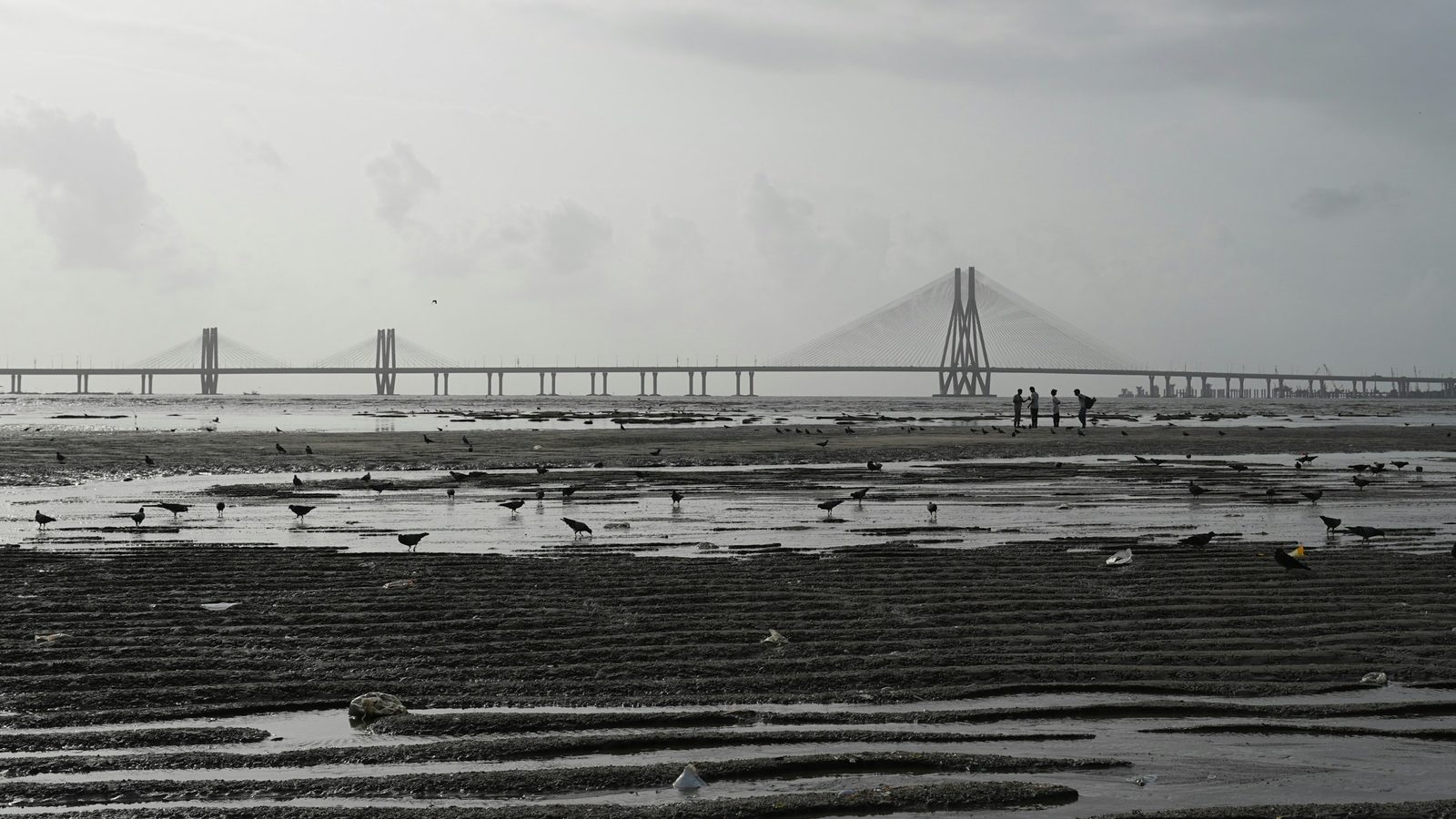
The day starts at the water. Between half past five and seven, Mahim beach Mumbai's early walkers have the sand largely to themselves, with the Sea Link to the south and Bandra's Mount Mary hill across the bay to the north. It is not a beach for swimming. The water carries what the Mithi river brings down, and after the monsoon the high-tide line is marked with plastic that volunteer groups clear in weekend drives.
What Mahim beach Mumbai offers instead is the open horizon, which is rare in the island city. For residents of flats in Mahim West on the streets behind the sea wall, this is the nearest thing to a front garden, and the walkers who come every morning are mostly people who live within ten minutes of it. By eight the light has gone flat. Most of the walkers have gone home.
The fish market that clears by ten
A short walk north along the shore, past the remains of Mahim Fort, is the Koliwada, the fishing village that predates nearly everything else in the neighbourhood. The Mahim Koliwada fish market works on the boats' schedule, not the shoppers'. The first catch is sorted and sold in the early morning, mostly by Koli women who set the prices and do not discuss them long, and by ten the best of it has gone to restaurants and households and the floor is being washed down.
Saturday is busier than a weekday. People come from Dadar and Bandra to buy pomfret, prawns and bombil directly. The honest note is that the Mahim Koliwada fish market is a working market. The lanes are wet and narrow, the smell carries several streets on a warm morning, and the fort itself is in poor repair, with houses built against its walls. A buyer looking at flats in Mahim West close to the Koliwada should visit at seven in the morning, not at four in the afternoon, and decide whether the market is part of the appeal or a reason to look two lanes further south.
Late morning on Lady Jamshedji Road
By late morning the neighbourhood's centre moves inland, to Lady Jamshedji Road Mahim, which residents of flats in Mahim West use for almost everything. The road runs south from the causeway towards Shivaji Park, and on a Saturday it carries the errands: the chemist, the bank, the bakery, the shop for school shoes. It also carries the traffic, which is the trade-off of a main road that doubles as the high street.
This is the stretch to buy Mahim halwa, the paper-thin sheets of sweet that the neighbourhood has been known for since the nineteenth century, sold in flat boxes by shops that have made it for generations. Lady Jamshedji Road Mahim also has the Sitladevi temple close by, one of the oldest in this part of the city, and since 2025 an Aqua Line metro station named after it, which has made the road easier to reach from Worli and Bandra Kurla Complex than it has ever been.
The church and the dargah
The afternoon belongs to the two buildings that give Mahim much of its character. St Michael's Church, at the northern end of Lady Jamshedji Road, is one of the oldest parishes in Mumbai, founded under the Portuguese in the sixteenth century. On Wednesdays its novena draws thousands of people of every faith. On a Saturday afternoon it is quiet, and the courtyard is one of the few places in the neighbourhood where nobody is in a hurry.
A few minutes away stands the Mahim dargah, the shrine of the fifteenth-century scholar Makhdoom Ali Mahimi. The Mahim dargah is busiest on Thursday evenings and during the ten-day Urs each December, when a fair fills the surrounding lanes and the traffic on the causeway slows to walking pace for a week and more. On an ordinary Saturday the lane outside is lined with stalls selling flowers, chadars and sweets.
Mahim's church and its dargah sit a few minutes apart, and the neighbourhood has organised its weekends around both for longer than anyone in it can remember.
For anyone living in Mahim Mumbai, the two are a fact of the calendar more than of faith. A flat on the lanes near the Mahim dargah is a flat that will be inside a crowd for the Urs, and buyers who mind that should know the dates before signing.
The park nobody mentions
Across the Mahim Causeway junction, on the Sion-Mahim link road at the edge of Dharavi, is the Maharashtra Nature Park, a planted forest on what was once a municipal dump. It covers about 37 acres, opens to the public in the morning and the afternoon, and runs guided walks on weekends. It is one of the least-known things to do in Mahim and one of the best: a Saturday walk there turns up kingfishers, herons and, in the right season, butterflies by the hundred.
It is also a reminder of where Mahim sits, and of what living in Mahim Mumbai borders. The park is a few minutes from the edge of Dharavi, and the Mahim on a broker's map and the Mahim on the ground share their roads.
Dinner, and where it runs out
Saturday dinner is the weakest part of the Mahim weekend. The restaurants in Mahim are good at a narrow range: Konkani and Malvani seafood thalis, Irani cafés that close early, and the kebab stalls near the dargah, which come into their own during Ramzan. There is very little for a late table on a Saturday, and almost nothing with a bar. The restaurants in Mahim that do run late are mostly takeaway counters.
So the Mahim Saturday night usually involves a short drive. Bandra's Hill Road is ten to fifteen minutes away and covers most of what Mahim does not, and Shivaji Park's restaurants are a walk to the south. Residents treat that as a fair trade for quiet streets. A buyer used to walking out for dinner at ten should treat it as a real limitation.
After dark off Mori Road
By eight in the evening the residential lanes off Mori Road are quiet, and by ten they are close to silent. That is the part of the Saturday that most often decides the purchase. Flats in Mahim West on those lanes are in older, lower-rise buildings, many of them heading into redevelopment, and the street outside is dark and walkable in a way the main roads are not.
The trade-off is parking. Several of these buildings have one space per flat at most, and on a Saturday night visitors park wherever the lane allows. Anyone seriously considering 1 BHK flats in Mahim or 2 BHK flats in Mahim in this part of the neighbourhood should arrive by car at nine on a Saturday night and see where the car ends up.
What a Saturday says about the address
A Saturday in Mahim is short on spectacle and long on routine: the beach at six, the market by ten, the halwa, the church, the dargah, and an early, quiet night. For the right household, that routine is the reason for living in Mahim Mumbai, and the reason the area keeps families for generations.
It is not for everyone. The restaurants in Mahim will not satisfy a household that eats out three nights a week, the Koliwada will not suit every nose, and the December Urs will test anyone near the causeway. The way to know is to spend a Saturday there before signing. Walk the beach, the Mahim Koliwada fish market and Lady Jamshedji Road Mahim end to end, then compare 1 BHK flats in Mahim and 2 BHK flats in Mahim on the streets that felt right. Among the things to do in Mahim, that walk is the one that matters most for a buyer of flats in Mahim West. The next Lifestyle piece maps the school run across the corridor.
Gala Habitats does not have a project in Mahim. Our closest homes are at Aakasa Shivaji Park, on Lt. Dilip Gupte Marg on the Mahim side of the maidan, about a ten minute drive from Mahim station, and at Paramount Matunga to the east. We write about Mahim because many of the buyers who look at our projects look here too, and the comparison is better made with an honest picture of both.